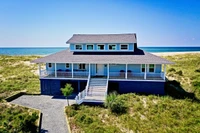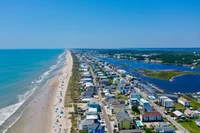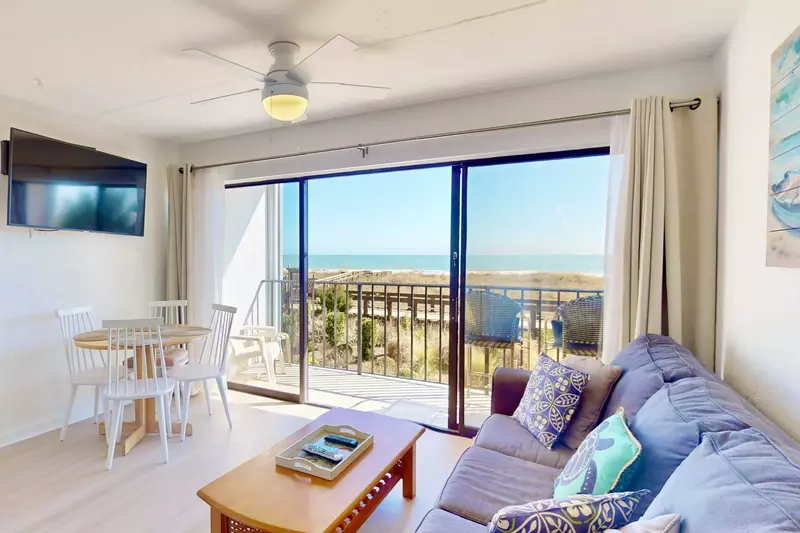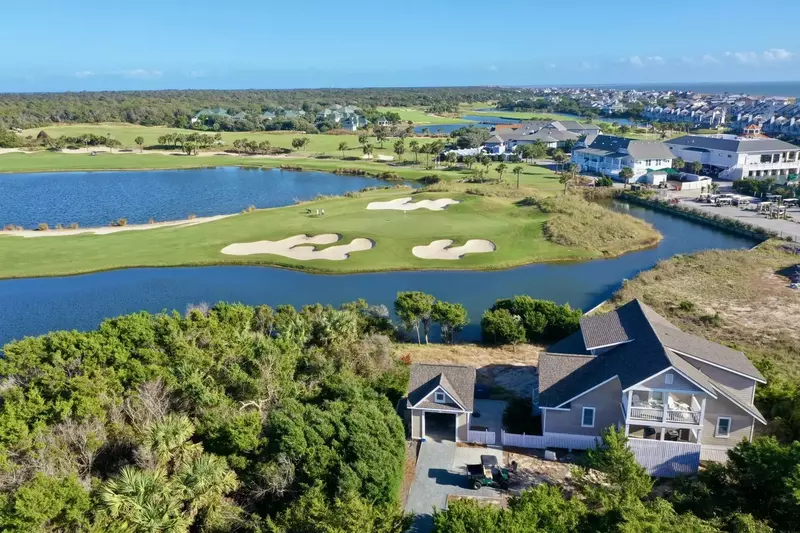
One of the first things Elisa and I tell guests booking one of our beachfront homes on Bald Head Island during summer is this: book the BHIC Turtle Walk as early as you possibly can. Don't wait until you're on the island. Don't assume there will be availability. Reserve it before you pack. We've done the walks ourselves more times than I can count. We've stood quietly on the beach at night and watched a loggerhead sea turtle come ashore, dig her nest, and lay her eggs. We've been out there with our grandkids when hatchlings emerged and made that first scramble toward the ocean. It is genuinely one of the most remarkable things you can witness on the East Coast and it happens right here, on the same beaches our guests walk every morning.
Every year we hear from guests after their stay. The Turtle Walk comes up in reviews more than almost anything else. "We went on the walk because Greg and Elisa recommended it - it was the highlight of the entire trip." That's a real review, and it's not an accident. We recommend it because we mean it.
If you're planning a stay on Bald Head Island between May and October, this guide covers everything you need to know about sea turtle season - the rules, the experiences available to you, and how to be a good steward of the beach without missing out on any of the magic.
When is Sea Turtle Season on Bald Head Island?
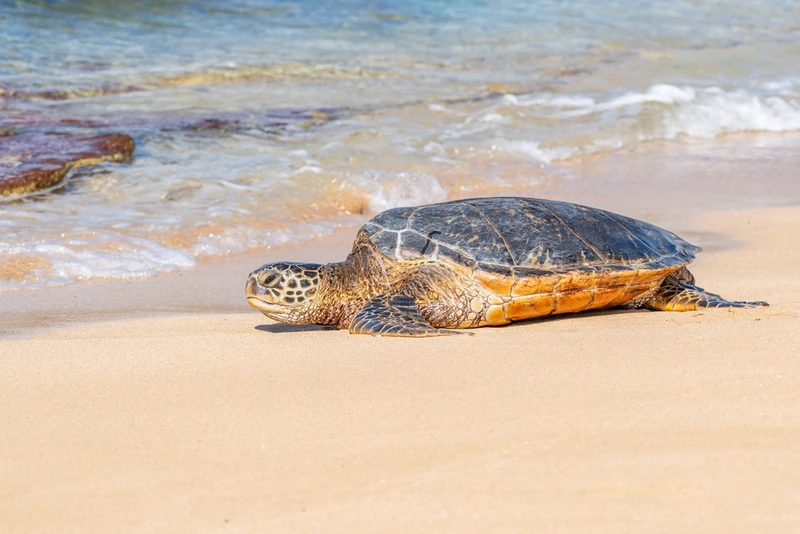
Sea turtle nesting season on Bald Head Island runs May 1 through October 31. During this window, loggerhead sea turtles — a federally threatened species — come ashore at night to lay their eggs in the dry sand above the tide line, and hatchlings emerge from their nests roughly 55 to 65 days after nesting and make their way to the ocean.
The Bald Head Island Conservancy monitors every nest on the island throughout the season, tagging turtles, counting eggs, and protecting nests from disturbance. They’ve been doing this work here for decades, and their data makes Bald Head Island one of the most important loggerhead nesting sites in North Carolina.
If you’re timing a visit specifically around turtles, late June through August is when nesting activity is most concentrated. Hatchlings typically begin emerging in August and continue through October. World Sea Turtle Week, June 8–16, is a particularly good time to visit if you want to pair a beach vacation with Conservancy programming and events.
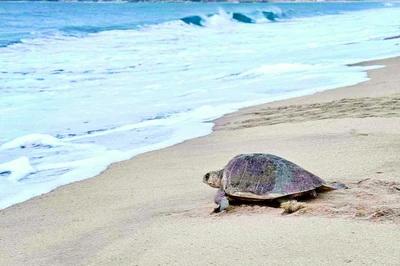
The BHIC Turtle Walks - The Right Way to See a Nesting Turtle
The Bald Head Island Conservancy runs guided Turtle Walks during peak nesting season, and I can’t recommend them strongly enough. Elisa and I have been on them multiple times. BHIC staff and trained volunteers patrol the beach at night, and when they locate a nesting turtle, small groups are brought to observe quietly from a respectful distance. What you see — if conditions cooperate — is something that stays with you.
I want to be direct about something here: wandering the beach on your own at night hoping to find a turtle is not the same thing, and it can actually cause harm. A nesting female who is startled by light or movement during her approach can abort and return to the ocean without laying. Hatchlings can be disoriented by light from any source. The Turtle Walk exists precisely because there is a right way to do this, and the Conservancy knows what it is.
If you go out on your own at night — for a walk, to stargaze, to enjoy the dark beach — and you encounter a turtle or fresh tracks, that’s wonderful. But stay back, stay still, turn off every light immediately, and call the wildlife hotline: 910-457-0089, extension 5. They’re monitoring around the clock during season and will guide you from there.
A few things to know before you book the walk:
- Reserve as early as possible — space is genuinely limited and walks fill up fast during peak season
- There are no guarantees — turtles don’t follow a schedule, and walks may not result in a sighting every night
- Red lights only — you will be asked to use red flashlights or no light at all
- Small groups only — that’s by design, to minimize disturbance
- Check bhic.org for current availability, pricing, and scheduling
For guests in our beachfront homes, we include red flashlights in the property and our welcome guide has the Conservancy booking link right at the top. We’ve found that guests who book the walk in advance — before they even arrive — are the ones who get to go.
Beach Rules During Sea Turtle Season - What Every Guest Must Know
Bald Head Island enforces a strict lighting ordinance from May 1 through October 31 to protect nesting turtles and hatchlings. These are Village ordinances, not suggestions, and they apply to every person on the island. Our beachfront homes are fully set up to comply — and we ask every guest staying in them to understand why these rules exist before they arrive.
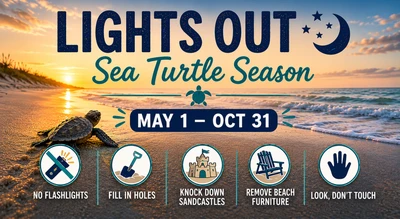
No White Lights on or Near the Beach After Dark
This is the most important rule and the one most guests don’t fully think through until we explain it. Nesting females can be disoriented by white light and turn back to the ocean without laying. Hatchlings instinctively move toward the brightest horizon, which should be the ocean — but artificial light on land can pull them the wrong direction with fatal results.
- No white flashlights, lanterns, or phone screens on or near the beach after dark
- Red flashlights only — turtles are significantly less sensitive to red wavelengths
- The BHIC Conservancy’s Turtle Central shop sells approved red flashlights and headlamps
- Ocean-facing homes must turn off exterior lights and close blinds from dusk to dawn — your rental will have specific instructions from us
- On your phone: switch to red light mode via accessibility settings if you need to use it on the beach
Remove All Beach Equipment by 9pm and Fill In Your Holes
The Village of Bald Head Island requires that all beach equipment — chairs, umbrellas, tents, toys, coolers, and anything else brought to the beach — be removed by 9pm every night during turtle season. Equipment left on the beach overnight can physically block a nesting turtle from reaching the dry sand, or trap hatchlings on their way to the water.
Fill in any holes you dig before you leave the beach. This is an easy one to forget after a long beach day, but a hatchling that falls into an open hole can become trapped and exhausted before reaching the ocean. We remind all our guests about this in the welcome materials, and we ask cleaners to verify the beach equipment is cleared during turnover days.
Quick summary:
- All beach equipment off the beach by 9pm
- Fill in all sand holes before leaving
- No white lights on or near the beach after dark
- Red flashlights only if you need light
- Keep your distance from any turtle, nest, or hatchling activity
If You See a Nesting Turtle or Hatchlings
If you happen to be on the beach at night and encounter a nesting loggerhead — or watch hatchlings emerging from a nest — consider it one of the luckiest moments of the trip. Elisa and I have had that experience more than once, and it never gets ordinary. But how you respond in that moment matters.
If you see a nesting turtle:
- Stop immediately and stay quiet
- Turn off every light — including red lights, phone screens, everything
- Do not approach, touch, or position yourself in front of the turtle
- Stay behind her so you’re not in her line of sight
- No flash photography under any circumstances
- Give her space and let the process happen
If you see hatchlings emerging or heading to the water:
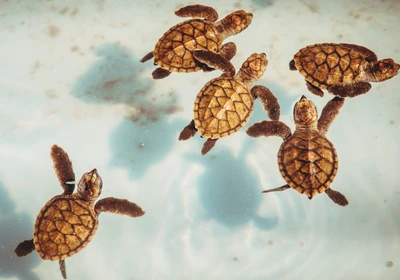
- Turn off all lights immediately and step back
- Keep the path to the ocean completely clear
- Do not pick up hatchlings or place them in the water — the crawl is part of their development
- Keep children and dogs calm and at a distance
- Do not create any obstacles between hatchlings and the waterline
In either situation, call the wildlife hotline: 910-457-0089, extension 5. They monitor around the clock during season.
Why BHI Takes This So Seriously - And Why We Do Too
Loggerhead sea turtles are a federally threatened species. They live for decades — females don’t reach reproductive maturity until their late teens or twenties — and they return to the same beach where they were born to nest. The turtles coming ashore on Bald Head Island right now may have hatched on this exact shoreline 20 or 30 years ago.
The Bald Head Island Conservancy has been protecting those nests since 1983. Their work, combined with the island’s strict development and lighting ordinances, has made Bald Head Island one of the more important loggerhead nesting sites in the state. The absence of street lights on the island isn’t a quirk of island life — it’s an intentional part of how Bald Head Island was designed and governed to make nesting possible year after year.
For us personally, this is part of why we love this island and why we’ve chosen to raise our family and run our business here. When our grandkids stood quietly on that beach and watched hatchlings make that first scramble toward the water, they understood something about stewardship that’s hard to teach any other way. That’s the Bald Head Island experience.
Planning Your Stay During Sea Turtle Season
Nesting season runs right through the peak of summer vacation, and it doesn’t limit your trip in any meaningful way. The island is fully active — the Shoals Club and BHI Club are open, restaurants are running, beach days are beautiful, and the fishing is excellent. The red flashlight rule is simple once you have one. The 9pm beach equipment rule just means wrapping up your beach day at a reasonable hour.
What sea turtle season adds to a Bald Head Island stay is something most guests don’t expect: genuinely dark nights, extraordinary stargazing, and the possibility — if you’ve booked the Turtle Walk or simply happen to be on the beach at the right moment — of witnessing something that no amount of planning can guarantee but that you’ll never forget if it happens.
Check out our Bald Head Island rentals and reserve your stay today!